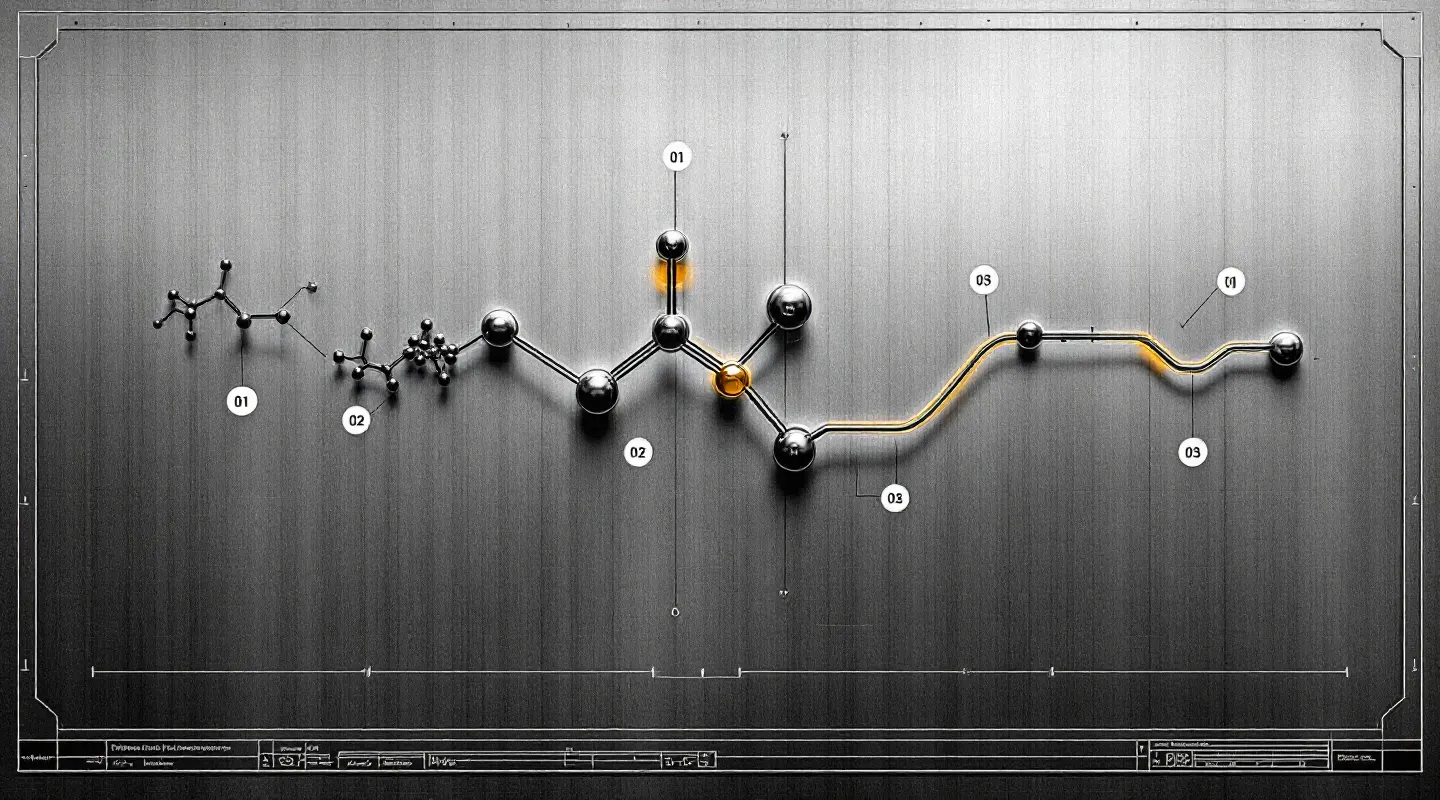
ASSEMBLY DRAWING / BPC-157 + TB-500 BLEND
The Wolverine stack, read as a technical specification.
A drafting table for the research literature on the BPC-157 + TB-500 blend — two mechanistically distinct research peptides, co-administered, with no controlled in-vivo combination study yet published.
The short specification
The Wolverine blend is two research peptides — BPC-157 and TB-500 — co-administered as a tissue-repair stack. BPC-157 is a 15-amino-acid fragment of a human gastric protein; it works on the vascular side, promoting new blood-vessel formation through the VEGFR2 pathway. TB-500 is a synthetic 7-amino-acid fragment of thymosin beta-4; it works on the cytoskeletal side, binding spare actin molecules to control how cells move and rebuild. The combination rationale is that the two pathways are non-overlapping, so together they might cover more repair territory than either alone. That logic is sound on paper. What it is not is tested: no controlled study has run both peptides head-to-head against either alone. Neither compound is FDA-approved. Both are WADA-prohibited. The pages here summarize what the published literature says — and, just as plainly, what it does not. See also what people report in practice.
What this site is
Wolverine Clinic is a literature aggregator. It pulls together the published research on the two peptides that make up the regenerative stack sometimes called the Wolverine blend — BPC-157, a 15-amino-acid pentadecapeptide derived from a sequence in human gastric juice, and TB-500, a synthetic fragment of thymosin beta-4 carrying the LKKTETQ actin-binding motif [1][2].
Neither peptide is approved by the U.S. Food and Drug Administration for any human indication. The blend itself has no regulatory status as a combination product. On FDA's safety-risk list, BPC-157 and TB-500 sit among substances whose nominations were withdrawn, outside Category 2; the safety concerns remain, and withdrawal supplies no authorization to compound them [16]. TB-500 has been listed by the World Anti-Doping Agency under category S2 (growth factors) at all times; BPC-157 has been listed under category S0 (non-approved substances) since 2022.
This project sells nothing and is no clinic; no clinician is on staff and no page here hands out medical advice. What it does is summarize what the published literature actually reports, with citation numerals throughout that link to the references index.
Two compounds, two mechanisms
The combination rationale in the preclinical literature is that the two peptides target non-overlapping pathways and might therefore complement each other in a tissue-repair context [18].
BPC-157 has been reported in rodent studies to promote angiogenesis through the VEGFR2 / Akt / endothelial nitric oxide synthase axis, to up-regulate growth hormone receptor expression in tendon fibroblasts by up to seven-fold in vitro, and to accelerate healing in models of Achilles tendon-to-bone injury, medial collateral ligament transection, gastrocnemius crush injury, and ischemic colitis [1][3][4][5][6].
TB-500 — and the full-length thymosin beta-4 from which it is derived — sequesters monomeric G-actin through the LKKTETQ motif, activates integrin-linked kinase, and accelerates cell migration in dermal, corneal, and cardiac wound models [9][10][12]. A Phase 3 ophthalmic trial of 0.1% thymosin beta-4 (RGN-259) in neurotrophic keratopathy reported complete corneal healing in 60% of treated subjects versus 12.5% on placebo at week 4 [14].
What the literature does not contain, as of this writing, is a controlled in-vivo study that directly tests the BPC-157 + TB-500 blend against either peptide alone [18]. Synergy claims in vendor copy and community forums are mechanistic extrapolations, not data.
What the recent reviews say
A 2025 scoping review of BPC-157 for musculoskeletal healing covered 35 preclinical and one clinical study, concluding that the compound shows broad regenerative activity in animal models but that only three published human pilot studies exist (knee pain, interstitial cystitis, and intravenous safety) [16]. The reviewers noted a plasma half-life under 30 minutes, the absence of FDA approval, and classified the compound as investigational pending large-scale human trials.
A second 2025 systematic review of off-label use in orthopaedic sports medicine concluded that the clinical use of BPC-157 has outpaced the supporting human evidence and recommended formal trials before any clinical adoption [19].
For thymosin beta-4 the human evidence is more substantive — Phase 2 dermal trials in pressure ulcers, stasis ulcers, and epidermolysis bullosa, a Phase 2 dry-eye trial, and a Phase 3 ophthalmic trial — but no FDA approval has been granted for systemic indications [12][14][15].
How to use this site
The site is organized as a technical specification sheet, not a marketing brochure.
— /research walks through mechanism and the most-cited preclinical studies on each component, plus the small clinical literature for thymosin beta-4. It is the densest page on the site.
— /dosage summarizes the dose ranges, routes, and pharmacokinetic notes reported in the published research. It explicitly does not contain a human dosing protocol.
— /faq answers the questions that drive most of the search traffic for the Wolverine nickname, including the regulatory and WADA questions.
— /references lists every cited source with DOI and PubMed link.
— /about describes the publisher and its editorial standards.
Every page footer carries the same disclaimer: this is research literature, not clinical advice, and nothing is for sale.